
Keynote Speaker 1:
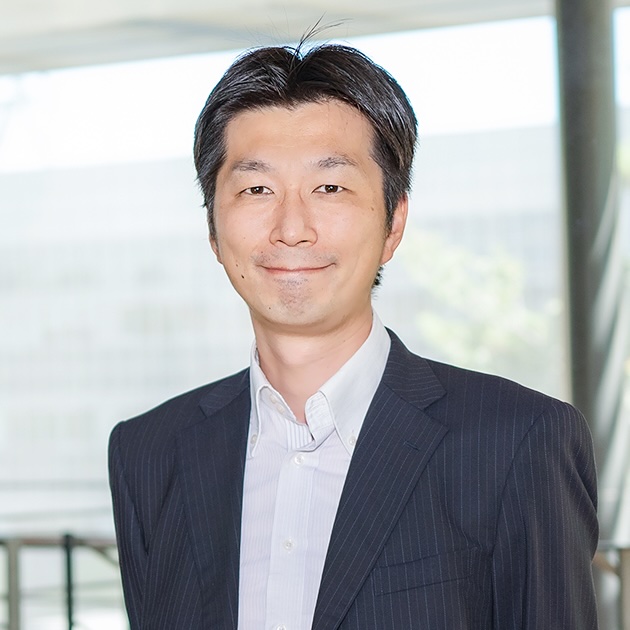 Dr. Takeshi Takahashi National Institute of Information and Communications Technology (NICT), Japan
Date/Time: Monday, July 13, 2026, 01.00-02.00 pm.
Speech Abstract
As AI technologies are rapidly being adopted across a wide range of domains, the cybersecurity landscape is undergoing significant transformation. While AI has enhanced defensive capabilities, it has also altered attacker behaviors and accelerated the evolution of cyber threats. A clear understanding of these changes is essential for shaping effective future cybersecurity strategies. This presentation examines how advances in AI have reshaped the structure of cyber threats, analyzes emerging attacker capabilities enabled by AI, and discusses the direction of next-generation cybersecurity countermeasures. In addition, it introduces current research efforts in this field, using our own activities as illustrative examples of how these challenges are being addressed in practice. Furthermore, ensuring the security of an AI-native cyber society cannot be achieved by individuals or single organizations alone. It requires trust-based collaboration and coordinated action across individuals, organizations, and sectors. Through this workshop, we aim to foster dialogue and serve as a catalyst for building collaborative communities that are essential for resilience and security in the AI-native era.
Keynote Speaker Biography
Dr. Takeshi Takahashi is the Director General of the Center for Research on AI Security and Technology Evolution (CREATE) at the National Institute of Information and Communications Technology (NICT), where he leads research and development in AI and cybersecurity. Prior to joining NICT, he worked as a researcher at Tampere University of Technology, a JSPS Research Fellow at Waseda University, and a business consultant at Roland Berger Ltd. During his tenure at NICT, he also served as a visiting research scholar at the University of California, Santa Barbara, and as a management trainee at the Cabinet Office of Japan. In August 2025, he established CREATE's Washington, D.C. office and is currently focused on advancing global collaboration in AI security research and development. He holds a Ph.D. and is a Certified Information Systems Security Professional (CISSP).
Keynote Speaker 2:
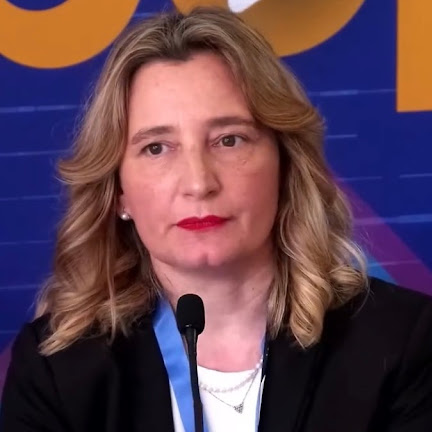 Professor Lerina Aversano Università degli Studi di Foggia, Italy
Date/Time: Tuesday, July 14, 2026, 10.40-11.40 am.
Speech Abstract
The contemporary debate on Artificial Intelligence (AI) frequently suggests the imminent obsolescence of the software engineer, with industry leaders predicting that generative systems will soon replace human developers. However, current industrial trends indicate that AI is not leading to the extinction of the profession, but rather to an expansion of its roles and responsibilities. While generative models can increase productivity by 20% to 45% by automating repetitive tasks, they primarily impact low-level coding. This shift elevates the human role toward high-level architectural design, security, and complex validation. Furthermore, research shows that AI-generated code often contains bugs, security vulnerabilities, and structural defects, making human oversight essential. As software becomes critical infrastructure for healthcare, mobility, and communications, relying solely on automated tools poses severe risks to control and reliability. Software engineering is fundamentally a discipline of method, ethics, and strategic vision—qualities that no AI can replicate. Engineers are also vital in developing AI itself, addressing challenges like data poisoning and algorithmic bias. Ultimately, the future lies in the augmentation of human expertise, positioning the software engineer as an indispensable steward of robust, ethical, and reliable technological ecosystems.
Keynote Speaker Biography
Lerina Aversano is a full professor of Information Processing Systems at the University of Foggia, the Technical and Scientific Director of the European Digital Innovation Hub for Secure Digital Transformation of Public Administration, and coordinator of the degree program in Digital Transformation Engineering at the University of Foggia. She is the author of numerous scientific publications in international conferences and journals. Her current research interests lie at the intersection of software engineering and data analytics and aim to advance research and practice, specifically in the healthcare field. She also serves on the editorial boards of international journals and on the organizing and program committees of international conferences. Professor Lerina Aversano has coordinated several regional, national, and international research projects, often in collaboration with industrial partners.
Keynote Speaker 3:
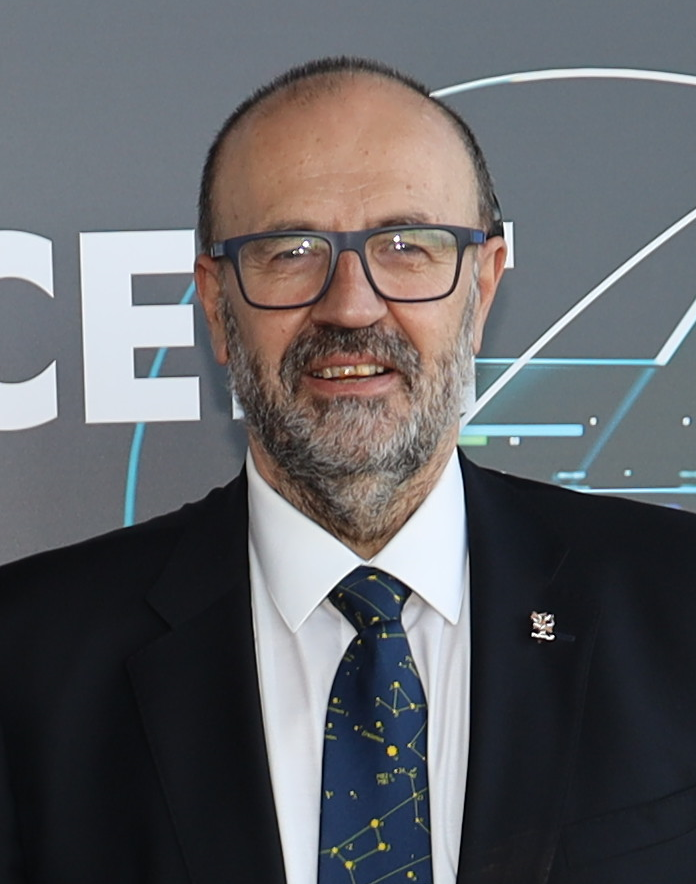 Professor Luis Hernández Encinas Spanish National Research Council (CSIC), Spain
Date/Time: Wednesday, July 15, 2026, 09.20-10.20 am.
Speech Abstract
Since the publication in 1997 of Shor's quantum algorithms, which allow for the breaking of the main asymmetric encryption systems used today, such as RSA and those based on elliptic curve, as well as protocols based on them, such as digital signatures, TLS, etc., the international cryptographic community has been analyzing and developing new encryption systems resistant to the threat posed by quantum computing. As a result of this research and with the collaboration of international organizations, several standards have already been published which form part of the called Post-Quantum Cryptography (PQC). The next step is to follow the recommendations of these international organizations (NIST, ENISA, etc.) in order to make a secure transition to the new PQC standards. This speech will present the current state of this new cryptography and the steps the European Union is taking to achieve this goal.
Keynote Speaker Biography
Dr. Luis Hernández Encinas is a Research Professor in the Department of Information and Communication Technologies (TIC) at the Institute of Physical and Information Technologies (ITEFI) at the Spanish National Research Council (CSIC), Madrid. He obtained his PhD in Mathematics from the University of Salamanca (Spain) in 1992. He has been a leader and principal researcher in national and international research projects. He is the author of several books, patents, over 200 articles, and over 120 contributions to workshops and conferences. He is a frequent speaker at cybersecurity workshops and seminars on several Committees on Cryptography and Cybersecurity. His current research interests include pre- and post-quantum cryptography and cryptanalysis, pseudorandom number generators, digital signature schemes, authentication and identification protocols, cryptobiometrics, side-channel attacks, and number-theoretic problems. Dr. Hernández has been awarded the "CCN-2021" National Award for Professional Career in Cybersecurity by the National Cryptologic Center (CCN) of the National Intelligence Center (CNI) of the Ministry of Defense, and has been decorated with the "Police Merit Cross with White Distinction" by the Ministry of the Interior in 2022. For more information, visit https://www.itefi.csic.es/en/staff/hernandez-luis