
Keynote Speaker 1:
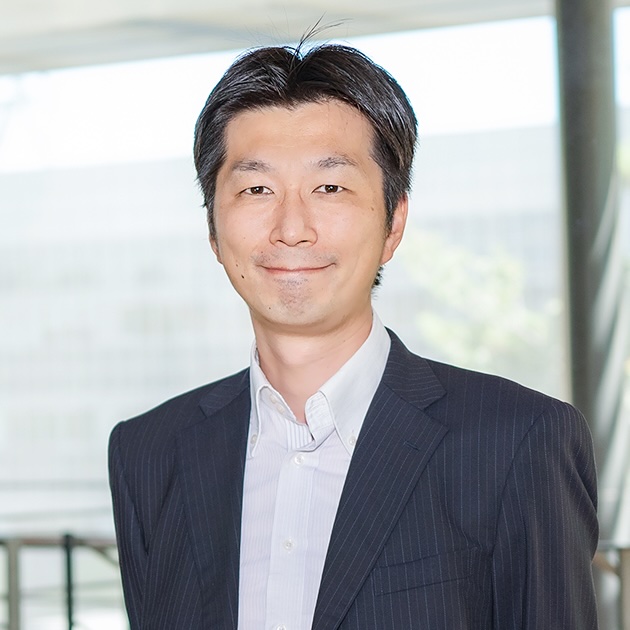 Dr. Takeshi Takahashi National Institute of Information and Communications Technology, Japan
Date/Time: Monday, May 4, 2026, 09.20-10.20 am.
Speech Abstract
As AI technologies are rapidly being adopted across a wide range of domains, the cybersecurity landscape is undergoing significant transformation. While AI has enhanced defensive capabilities, it has also altered attacker behaviors and accelerated the evolution of cyber threats. A clear understanding of these changes is essential for shaping effective future cybersecurity strategies. This presentation examines how advances in AI have reshaped the structure of cyber threats, analyzes emerging attacker capabilities enabled by AI, and discusses the direction of next-generation cybersecurity countermeasures. In addition, it introduces current research efforts in this field, using our own activities as illustrative examples of how these challenges are being addressed in practice. Furthermore, ensuring the security of an AI-native cyber society cannot be achieved by individuals or single organizations alone. It requires trust-based collaboration and coordinated action across individuals, organizations, and sectors. Through this workshop, we aim to foster dialogue and serve as a catalyst for building collaborative communities that are essential for resilience and security in the AI-native era.
Keynote Speaker Biography
Takeshi Takahashi is the Director General of the Center for Research on AI Security and Technology Evolution (CREATE) at the National Institute of Information and Communications Technology (NICT), where he leads research and development in AI and cybersecurity. Prior to joining NICT, he worked as a researcher at Tampere University of Technology, a JSPS Research Fellow at Waseda University, and a business consultant at Roland Berger Ltd. During his tenure at NICT, he also served as a visiting research scholar at the University of California, Santa Barbara, and as a management trainee at the Cabinet Office of Japan. In August 2025, he established CREATE's Washington, D.C. office and is currently focused on advancing global collaboration in AI security research and development. He holds a Ph.D. and is a Certified Information Systems Security Professional (CISSP).
Keynote Speaker 2:
 Professor Anna Farzindar Loyola Marymount University, USA
Date/Time: Monday, May 4, 2026, 03.40-04.40 pm.
Speech Abstract
As artificial intelligence becomes increasingly embedded in creative practice, urgent questions arise around ethical representation, cultural bias, and the erosion of human intention in AI-generated art. This talk introduces a novel agent-based AI system designed not to replace artistic vision, but to support and protect it. Rather than relying on generic prompt-driven generation, the system provides explainable, structured feedback through compositional analysis, keeping the artist firmly in control of the creative process. By foregrounding transparency, cultural sensitivity, and inclusive critique, the system directly addresses core ethical challenges in AI; fairness, bias, explainability, behavioral influence, and human–AI interaction. Beyond individual artistic expression, the talk expands compositional analysis to industrial and commercial contexts, demonstrating how the same ethical framework can guide responsible AI use in applications such as commercial poster design. In doing so, it illustrates the broader relevance of human-centered, ethically grounded AI across creative and professional domains. Ultimately, this talk argues for generative AI systems that embed cultural literacy, ethical reasoning, and transparency by design, advancing a human-in-the-loop paradigm where creativity remains intentional, accountable, and unmistakably human.
Keynote Speaker Biography
Dr. Anna Farzindar is a clinical professor at the Computer Science Department, Loyola Marymount University (LMU) in Los Angeles, California. Prior to her current position, she served as a faculty member in the Department of Computer Science at the University of Southern California (USC) for approximately a decade. She earned her Ph.D. in Computer Science from the University of Montreal and her Doctorate in automatic summarization of legal documents from Paris-Sorbonne University. She made significant contributions to the fields of AI, Natural Language Processing, Social Media Analysis, Interdisciplinary Data Science and Healthcare Predictive Machine Learning. She is the author and co-author of more than 30 scientific papers and five books in the field of AI. With a strong entrepreneurial background, she founded NLP Technologies Inc., a tech startup in Montreal, Canada, based on her Ph.D. research, and served as its CEO for over a decade while also being an Adjunct Professor at the University of Montreal. Beyond her work in AI, Dr. Farzindar is also an accomplished artist. She studied at the École des Beaux-Arts de Versailles, and her paintings have been featured in the book One Thousand and One Nights, where her vibrant color palette and contemporary style explore the role of women in modern society.
Keynote Speaker 3:
 Professor Luis Coelho School of Engineering, Polytechnic University of Porto, Portugal
Date/Time: Tuesday, May 5, 2026, 01.20-02.40 pm.
Speech Abstract
In the current technology landscape, there is a growing perception about the limits of the current AI development strategies. So far, the dominant paradigm for data has been “the more, the better”. Concerning models, the number of parameters has continued to grow and the complexity of operation, such as in the popular transformer models, demands immense computational resources. To fulfill these requirements, hardware has evolved in the same direction, with the creation of massive computation clusters that take weeks for a training task with energy consumption comparable to many cities. This reliance on brute-force scaling is yielding diminishing returns, leading to increased scrutiny of its long-term sustainability. This keynote addresses the critical transition from model-centric to data-centric architectures, arguing that the quality and provenance of a dataset are the primary determinants of model performance, safety, and reasoning capabilities. The presentation will deconstruct the comprehensive lifecycle of dataset preparation, beginning with the initial conceptualization phase where the goals of the model are defined. The development pipeline will be explored to optimize the process required to transform raw, noisy information into a high-fidelity corpus, examining the technical nuances of strategic prospecting, ethical extraction, and multi-stage refining processes.
Keynote Speaker Biography
Professor Luís Coelho is an experienced researcher and educator specializing in AI and machine learning applied to biomedical signal and image processing, with particular focus on medical imaging analysis, speech/audio processing for early detection of neurodegenerative diseases (e.g., Parkinson’s, Alzheimer’s), EEG pattern recognition, human–machine interfaces, and intelligent healthcare systems. He holds degrees in Electronics Engineering (BSc 2000, MSc 2005) from the University of Porto and an international PhD in Telecommunications and Signal Processing from the University of Vigo, Spain (2012). Since 2004 he has been at ISEP (Polytechnic University of Porto) where he teaches advanced signal/image processing courses and has coordinated the Biomedical Engineering programs and Healthcare Management course. With over 100 peer-reviewed publications, participation in multiple national/international R&D projects, consultancy experience at Microsoft Portugal, and supervision of more than 200 industry internships, masters and PhD, Dr. Coelho maintains strong ties between academia and industry. He actively contributes to the community as a reviewer, conference organizer, and journal editor.
Keynote Speaker 4:
 Professor Dr Nadire Cavus Department of Computer Information Systems, Near East University, Cyprus
Date/Time: Wednesday, May 6, 2026, 09.20-10.20 am.
Speech Abstract
Artificial intelligence (AI) is no longer a futuristic concept—it is a reality transforming every aspect of our lives, from the way we work to the way we learn. Its rapid adoption across sectors such as finance, agriculture, healthcare, and industry has made AI literacy a critical skill for career advancement and professional success. Education, inevitably, is also being reshaped. Among all disciplines, Computer Science Education is perhaps the most affected, requiring updated curricula, innovative teaching strategies, and new assessment methods that integrate AI. Educators and students must not only master technical skills but also understand the ethical implications of AI, including responsible use, data privacy, and bias awareness. This keynote will explore the challenges and opportunities of integrating AI into Computer Science Education, highlight the urgent need for teacher training, and discuss strategies to prepare students for a future in which AI is foundational, not optional.
Keynote Speaker Biography
Professor Dr. Nadire Cavus, born on August 16, 1972, in Nicosia, is a Professor and Chair of the Department of Computer Information Systems at the Faculty of Artificial Intelligence and Informatics, Near East University. She graduated from the same department at Near East University in 1995, completed her PhD in 2007, became an Assistant Professor in 2008, an Associate Professor in 2011, and was promoted to full Professor in Information Systems in 2016. Prof. Dr. Cavus has published over 60 scientific articles in SSCI-indexed Q1 and Q2 journals, authored 13 books, and presented her research at numerous international conferences. She serves on editorial and advisory boards of high-impact journals and has reviewed for many leading scientific publications. With over 6,000 citations, an h-index of 36, and recognition as one of the top 3% of influential scientists globally, she has made a significant impact on the academic and scientific community. Her research interests include artificial intelligence, digital transformation, e-commerce, web development, Learning Management Systems (LMS), programming languages, virtual and mobile learning environments, distance education, information systems, and algorithms.