
Keynote Speaker 1:
 Professor Stefan Wolfgang Pickl DKKV, COMTESSA, Munich, Germany
Date/Time: Monday, August 24, 2026, 3.20-4.20 pm.
Speech Abstract
The current situation faced both the decision-makers in politics in particular as well as the players in the logistics industry in generally a multitude of complex challenges. The supply chains considered currently need special attention to be optimized on complex disruptions that affect the general security of supply..
As part of the project »OPERA - Future Operations« an interdisciplinary consortium develops a trend-setting interactive visualization tool to support decision makers politics, to adapt and to explore different strategies. This talk gives an overview on that project. Furthermore it presents the special sector-based approach IDEA4C as part of the IRIS project:
I - Identification of critical regions, sectors and coupling principles - Cost-Benefit Analysis for critical sectors.
D - Data-driven constraint optimization - Coupled Sector-based Models.
E - Exploratory Strategies/ Recognition of critical pathways and sectors - Characterization of Pathways.
A - Adaptation and Quantifying Analysis - Coordination of Strategies.
This 4C-approach describes a new integrated modelling suite for developing and assessing relief distribution strategies. This hybrid optimization framework as example for IRIS has been conceptualized and is currently being developed with and for experts in the field of disaster and emergency management, in order to tackle the real issues arising during such this crisis.
Keynote Speaker Biography
Professor Stefan Wolfgang Pickl received his Diploma in Mathematics, Electrical Engineering, and Philosophy from the Technical University of Darmstadt in 1993 through ERASMUS-scholarship from the EPFL Lausanne. In 1998, he received his PhD from the Technical University of Darmstadt. For the period 2000-2005, Professor Pickl was assistant scientist and project manager at the Center for Applied Computer Sciences in Cologne (ZAIK). In 2000, he received the PhD thesis award from the German Society for Operations Research. He is the recipient of the International Best Paper Award for the years 2003, 2005, 2007 and 2015, and the NATO SAS Excellence Award in 2023. He is Vice President of the German Committee for Disaster Reduction (DKKV). There, he is mainly engaged in the development of resilient systems and integrated assessment models. During the years 2004 to 2023, Professor Pickl was invited as a visiting-professor in the United States, Asia, and Europe. He was a Visiting Scientist in Los Alamos National Labs, SANDIA Laboratory, MIT, as well as the Santa Fe Institute for complex systems. He is the Founding Director of COMTESSA (Core Competence Center for Operations Research, Management - Tenacity - Excellence, Safety and Security ALLIANCE). For the period 2013-2023, he was an international coordinator of the innovative security projects REVEARS, RIKOV and REHSTRAIN (Resilience of the Franco-German High Speed Train Network). Professor Dr. Stefan Pickl is Honorary Chair at The University of Nottingham Malaysia Campus.
Keynote Speaker 2:
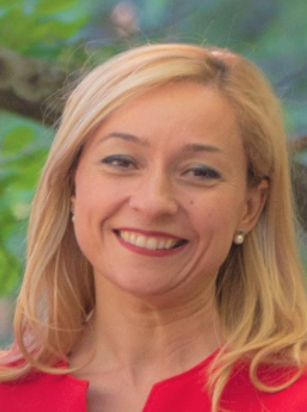 Prof. Dr. María Isabel González Vasco Catedrática de Universidad, Spain
Date/Time: Tuesday, August 25, 2026, 03.20-04.20 pm.
Speech Abstract
Post-quantum cryptography seeks to develop cryptographic systems that remain secure in the presence of quantum computers. Among the various approaches under investigation, methods based on algebraic and group-theoretic structures have emerged as a promising and versatile direction. In this paper, we review recent progress in the field, focusing on constructions that rely on group actions as a unifying framework for protocol design. These approaches generalize classical ideas and enable new forms of key exchange and encryption schemes. We place particular emphasis on isogeny-based cryptography, where the problem of computing isogenies between elliptic curves serves as the underlying hardness assumption. We discuss the main ideas behind these constructions, their advantages in terms of key size and structure, and the challenges they face, including recent cryptanalytic results. Our aim is to provide a coherent overview of this rapidly evolving area and to highlight the central role of algebraic methods in the development of quantum-resistant cryptographic tools.
Keynote Speaker Biography
Professor María Isabel González Vasco currently holds a Chair of Excellence in the Department of Mathematics at Universidad Carlos III de Madrid. She is on leave from her position as Full Professor of Applied Mathematics at Universidad Rey Juan Carlos. With over two decades of experience in mathematical cryptography, Professor González Vasco has built a distinguished career marked by extensive collaboration with national and international institutions, including Philips Crypto B.V., the IAKS Institute in Karlsruhe, Florida Atlantic University, and the IMDEA Software Institute. She is the author or co-author of more than 60 scientific publications, including four presented at top-tier conferences and 31 articles published in JCR-indexed journals—six of which appear in the first quartile. Additionally, she is co-inventor on two patents. She currently serves as the Principal Investigator of the Spanish node for the NATO Science for Peace and Security Program-funded project "Secure Communication via Classical and Quantum Technologies." Since 2017, she has been a member of the Board of the Spanish Royal Mathematical Society (RSME), where she now holds the position of Vice President.
Keynote Speaker 3:
 Professor Dr. Nadire Cavus Near East University, Cyprus
Date/Time: Wednesday, August 26, 2026, 12.40-01.40 pm.
Speech Abstract
Rapid technological advancements are driving a fundamental transformation in education, moving learning beyond traditional classrooms into dynamic, intelligent, and always-accessible digital platforms. In this evolving landscape, students become active learners while teachers act as guides and facilitators. Innovative technologies such as artificial intelligence, the Internet of Things (IoT), smart systems, the metaverse, virtual reality, and augmented reality enable immersive, student-centered, lifelong learning within smart classrooms, connected campuses, and virtual learning environments. Learner data analysis allows for personalized, adaptive, and effective learning experiences, while raising critical considerations of algorithmic bias, digital inequality, data security, and ethics. This transformation also reshapes pedagogical and cognitive dimensions, fostering deeper, interactive, and engaging learning. Ultimately, the future of education depends not merely on integrating new technologies but on a holistic, sustainable, and thoughtfully designed system that aligns digital innovation with learner needs, teaching practices, and societal expectations.
Keynote Speaker Biography
Professor Dr. Nadire Cavus, born on August 16, 1972, in Nicosia, is a Professor and Chair of the Department of Computer Information Systems at the Faculty of Artificial Intelligence and Informatics, Near East University. She graduated from the same department at Near East University in 1995, completed her PhD in 2007, became an Assistant Professor in 2008, an Associate Professor in 2011, and was promoted to full Professor in Information Systems in 2016. Prof. Dr. Cavus has published over 60 scientific articles in SSCI-indexed Q1 and Q2 journals, authored 13 books, and presented her research at numerous international conferences. She serves on editorial and advisory boards of high-impact journals and has reviewed for many leading scientific publications. With over 6,000 citations, an h-index of 36, and recognition as one of the top 3% of influential scientists globally, she has made a significant impact on the academic and scientific community. Her research interests include artificial intelligence, digital transformation, e-commerce, web development, Learning Management Systems (LMS), programming languages, virtual and mobile learning environments, distance education, information systems, and algorithms.